

Beyond the Pretty: Why Your Website Needs More Than Just Good Design

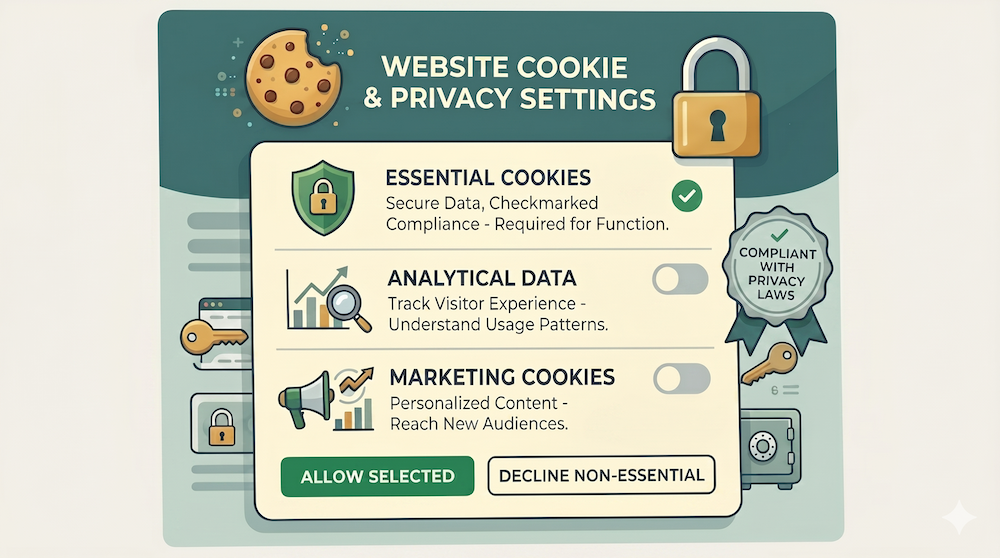
When you visit a website today, you’re almost always greeted by a little window asking for your permission to use "cookies." You probably scroll past the links for "Privacy Policy" or "Terms and Conditions" tucked away in the footer without a second thought. As a business owner, it’s easy to view these as digital clutter—the "boring stuff" that gets in the way of the visuals we worked so hard to create.
At Calluna Collective, we focus on building intentional brands. But there is a massive difference between a website that looks professional and one that actually protects the person running it.
Think of it this way: Identity is the visual story we tell—the colors, the voice, and the emotional connection. Compliance is the set of legal rules that allow you to operate safely on the internet. You can have the most beautiful site in the world, but if it isn’t legally compliant, you’re essentially running a storefront without a permit.
What is actually happening in 2026?
The rules for the internet have changed significantly over the last few years. Two major pieces of legislation have moved from "optional" to "mandatory" for almost every business owner:
- CCPA/CPRA: These laws give your visitors the right to know exactly what you’re doing with their information. They have the right to see it and, more importantly, the right to tell you to stop sharing it with advertisers.
- The Delete Act: This is a newer requirement that gives people a "one-click" way to tell companies to wipe their data entirely.
If you have a newsletter signup, a contact form, or even a simple tool to see how many people visited your site today, you are collecting data. It doesn't matter if you are a freelancer or a startup; if you’re collecting an email address, you are legally required to have a clear Privacy Policy and a way for people to opt out.
The DIY Trap
I often get asked why platforms like Shopify, Wix, or Webflow don’t just handle this automatically. These builders are great tools, but they are not legal advisors.
They provide you with a high-performance car, but they don't check if you have auto insurance. They give you a blank space for a footer and a generic cookie banner, but they leave the responsibility of actually being compliant on your shoulders. They shift the liability to you so that if a legal issue arises, they aren't the ones on the hook.
Better Data, Better Reach
One thing I tell my clients is that being compliant might actually make your marketing numbers look "lower." When you give people a real, honest choice to say "no" to tracking, some will take it.
While it’s tempting to want those big, inflated numbers back, this shift is actually a major advantage. In 2026, we want quality over quantity. When someone agrees to your cookies and stays on your site, you know they are a high-intent lead who actually trusts your brand. Compliance acts as a filter, removing the noise and leaving you with an audience built on a foundation of transparency.
Building a Stronger Connection
At Calluna-Collective, I believe that truly understanding your customers starts with respecting their boundaries. When your website is set up correctly, you aren't just avoiding a fine—you’re telling your audience that you value their security as much as you value their business.
That level of respect turns a one-time visitor into a long-term advocate. It improves your reach because it builds a reputation for integrity that a "pretty" website alone could never achieve.
If you’re not sure where your legal disclosures stand, or if you’re worried that your current setup is more of a liability than an asset, I’m here to help. We can look at how to align your site’s technical requirements with your brand’s goals, ensuring your digital home is as secure as it is intentional.