

Chicago Invests in Billionaires, Not Small Business

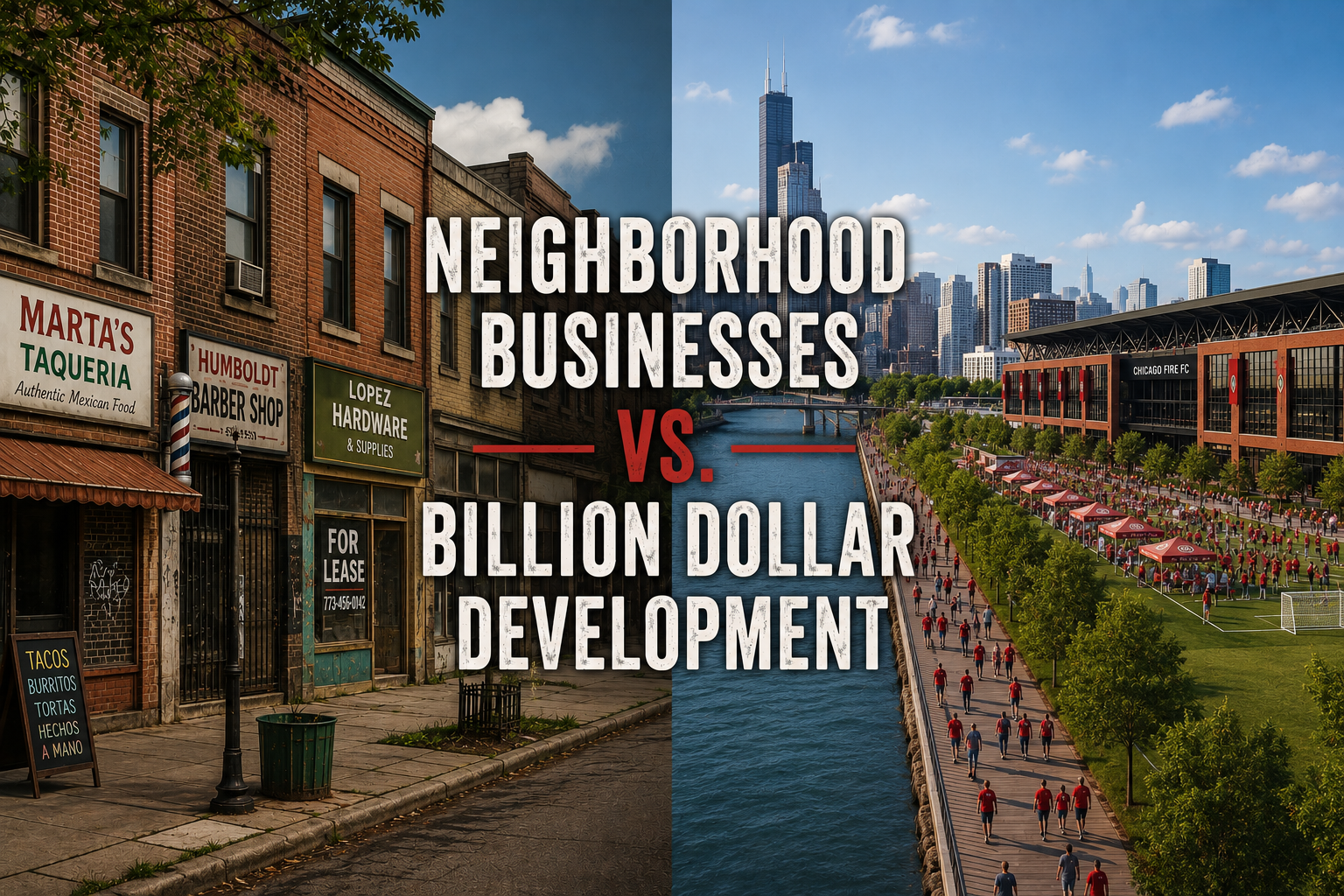
If you want to know what Chicago's political establishment values, don't listen to their press conferences. Look at their receipts.
If you're an everyday Chicago resident or a neighborhood small business owner, you're drowning in the city's nickel-and-dime revenue machine. Taxpayers face higher fines, while neighborhood shops absorb license fee hikes of up to 400% — a two-year Regulated Business License alone jumped from $250 to $1,000 this year.
But if you are a billionaire mega-developer or a professional sports owner? City Hall doesn't send you a bill. They roll out the red carpet, hand you the city's credit card, and call it "economic development."
The latest masterclass in sports-billionaire welfare played out at "The 78" — the 62-acre mega development in the South Loop, where Chicago just approved a $424 million Tax Increment Financing (TIF) infrastructure package to prepare the site for a new, 22,000-seat stadium for Chicago Fire FC. The stadium's name — McDonald's Park — is a fitting detail: this isn't just billionaire welfare, it's corporate welfare, with yet another multi-billion-dollar company buying naming rights to a site the public is subsidizing.
It's worth noting that the stadium itself is being privately funded by the team's billionaire owner, Joe Mansueto. But the city is picking up the tab for the surrounding land. But when you look at how TIF works — and the double standard between how the city treats billion-dollar developers and how it treats Chicago small businesses — it becomes clear that our city's priorities are entirely upside down.
How TIF Works — And How Related Midwest Games It
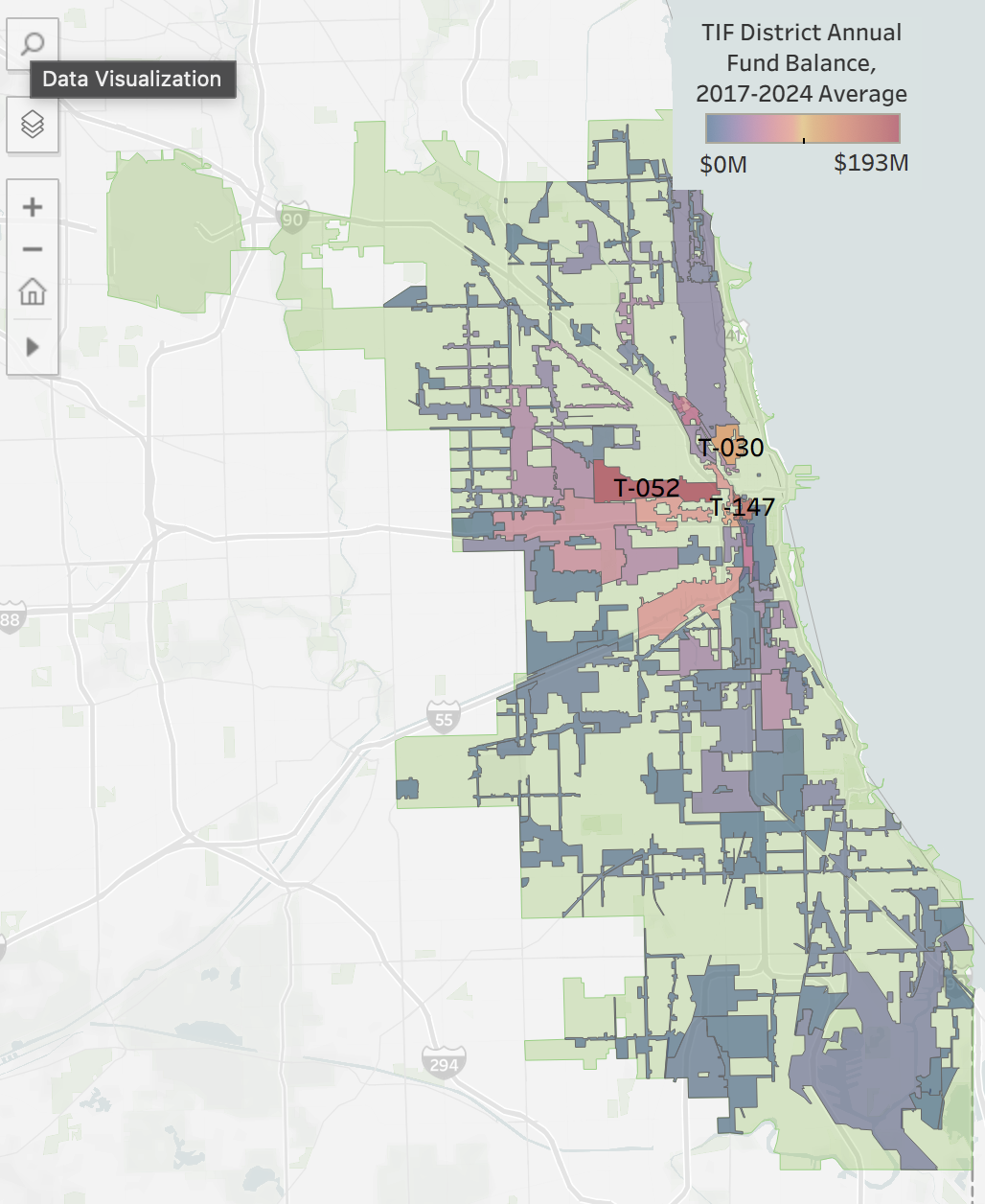
To understand the audacity of this giveaway, start with why Tax Increment Financing exists. When the Illinois General Assembly passed TIF legislation in 1977, the goal was to combat neighborhood blight — a financial lifeline for disinvested corridors, the kind still found across Chicago's South and West sides. To create a TIF district, the city has to pass a strict legal test known as the "But-For" clause: it must prove that but for this subsidy, the land would sit empty forever because no private developer could afford to touch it.
Once a district exists, property tax revenue is frozen at a baseline for 23 years.
Crucial fact: This doesn't freeze taxes for property owners — your bill still rises every time the county reassesses. It freezes how much of that growth reaches the city's general coffers instead of a hyper-local, city-controlled fund.
Decades ago, Chicago designated real estate across dozens of TIF districts citywide as "blighted" or "conservation" zones to capture rising tax wealth—including the booming downtown corridor where The 78 sits. Because TIF law requires money from each district to be spent within that same district, the hundreds of millions of dollars sitting unspent in downtown's TIF fund stay locked there—funding a billionaire's stadium instead of flowing into the city's General Fund, where it could legally reach the neighborhoods TIF was conceived to help, whether or not they have a TIF district of their own.
Which brings us to the paradox of The 78. If the But-For clause says public money is only for land no private developer would touch, why is the city handing millions to Related Midwest — the Chicago arm of Related Companies, the $70 billion real estate empire founded by Stephen Ross, who also happens to own the Miami Dolphins? This is one billionaire sports owner's development company building the site for another billionaire sports owner's stadium, on the taxpayer's dime.
If a local entrepreneur opens a restaurant in an old building with outdated wiring or bad plumbing, the city expects them to foot the bill to bring it up to code. They don't get to go to City Hall and say, "I bought this restaurant, but I won't serve a single plate unless you pay to fix my kitchen." Yet, despite being backed by one of the largest real estate empires in the country, Related Midwest gets to claim it can't make its own land buildable without taxpayers picking up the site-prep tab. It turns a legal test meant to protect underserved communities into a semantic loophole that shields billionaire developers from the basic costs of doing business.
To fund this package, the city is sliding $287 million out of the Canal/Congress TIF district over eight years — a district that covers parts of downtown and the affluent West Loop. Ald. Bill Conway warned the raid would leave the city short of TIF resources for upkeep of Union Station, the Ogilvie Transportation Center, and a Greyhound bus station the city is buying, saying it "will have a significant negative impact on public transit in the city."
Here's the part that gets lost: in 2019, the city already committed up to $700 million in TIF-funded reimbursements to this site — $450 million of it earmarked for the very portion now becoming the stadium campus — on the condition that at least 20% of any housing built there would be affordable. Seven years later, no housing has broken ground, so none of that affordable housing exists either. This $425 million package isn't new money stacked on top of that; it's a reworked slice of the original financing, restructured because a soccer stadium generates far less tax revenue than the office towers and condos originally promised. That shortfall is exactly why the city needs to raid a neighboring TIF district to make the math work — and someone has to absorb that gap. It isn't the billionaire developer.
The hypocrisy wasn't lost on everyone in the room. Zoning Chair Gilbert Villegas noted that Mayor Johnson once campaigned against the Lincoln Yards TIF subsidy, at the time dismissing it as a "playground for the rich" — only to now push through a strikingly similar deal himself. Villegas summed up the contradiction bluntly: it's one thing to campaign against corporate giveaways, and another thing entirely to govern without handing them out.
If the city let these wealthy downtown TIFs expire, that massive pool of tax dollars would flow naturally back into the general budget pool. From there, it could finally be used for its original, intended purpose: funding vital public services, repairing crumbling infrastructure, and supporting small businesses across the South and West sides. Instead, the city is shifting downtown wealth into an adjacent downtown megaproject, ensuring underserved neighborhoods never see a dime.
Defenders have an answer to this, and it deserves a response. Finance Chair Pat Dowell argued none of the promised development happens without roads, sewers, and utilities in place first — a fair point on its face. But it dodges the real question: not whether infrastructure should exist, but who pays for it. A developer who buys 62 acres of underused land is normally expected to absorb site-prep costs, the same way a small business owner covers the cost of bringing an old storefront up to code. Dowell's argument justifies building the roads. It doesn't justify who's footing the bill.
Where the Money Actually Goes
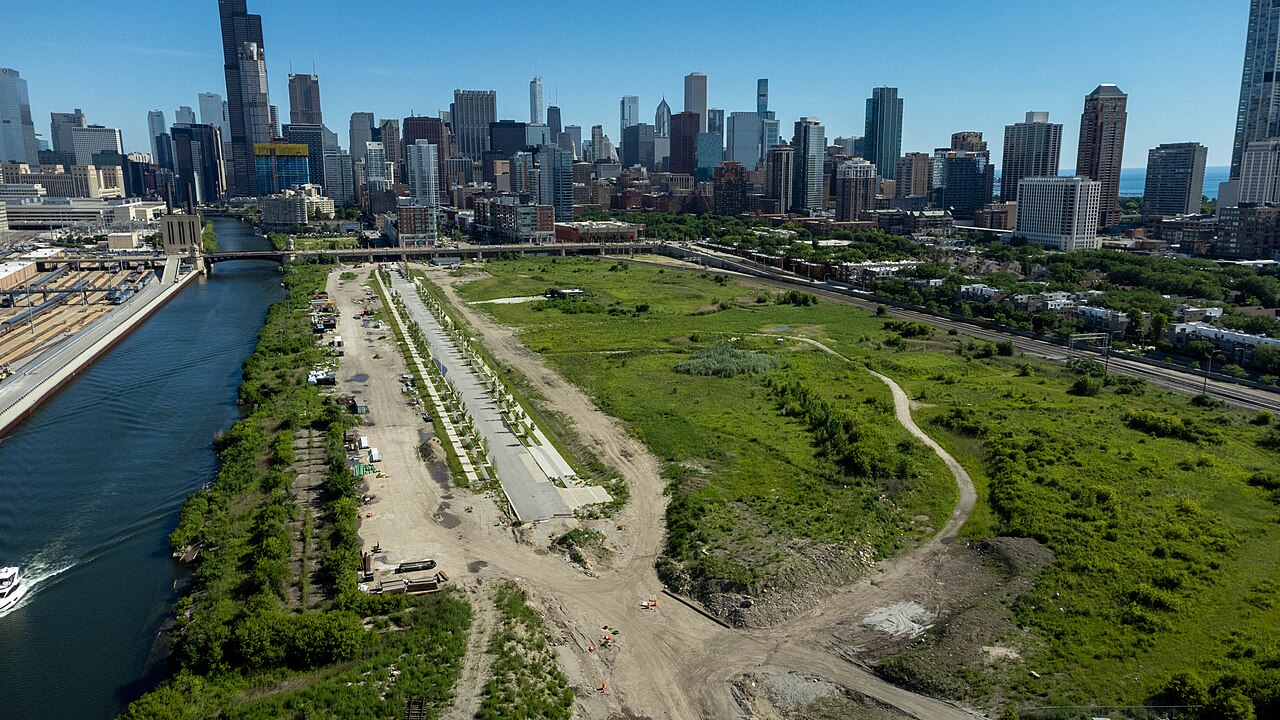
Parts of this $425 million package are technically legitimate public infrastructure that qualifies for TIF support:
• $105 Million for Internal Roads: Building out sections of LaSalle, 13th, 14th, and 15th streets to connect the blank slate to the city grid.
• $24 Million for Clark Street: General street improvements and a designated pedestrian connection.
• The Remainder: Funding necessary upgrades to the on-site Metra rail tracks.
These roads and transit lines are public goods that any Chicagoan can theoretically access. And that's exactly the point: TIF dollars are legally allowed to fund public infrastructure like this — sidewalks included. Plenty of Chicago's small business corridors sit inside TIF districts of their own. Yet those small businesses don't get 100% publicly funded infrastructure. When their sidewalk cracks, they're routed instead to the Shared Cost Sidewalk Program — the same lottery every homeowner competes for, open one day a year and gone within hours — and still expected to pay $1,000 to $2,400 out of pocket. If TIF money can rebuild a developer's streets at full public expense, it can just as easily cover a small business's sidewalk. It simply isn't a priority.
The gap gets starker the closer you look at where the real money goes. To put $216 million in perspective: it's roughly what it would take to give $100,000 grants to more than 2,100 small businesses across Chicago — money that could cover rent, payroll, or the very licensing fees squeezing them right now. TIF rules mean this specific money could never actually leave the Roosevelt/Clark district. But that's exactly the point: the same TIF mechanism locking $216 million into a parking garage for a private stadium could just as easily fund direct small business support inside neighborhood TIF districts — if the city treated that as a priority. Somehow, 1,200 parking spaces outweighed 2,100 small businesses and the people they employ.
That garage comes with its own broken promise. To make the financing work, the city quietly dropped a previously promised CTA Red Line station at 15th and Clark — the transit connection that would have let working-class Chicagoans reach this development without a car.
The city sacrificed an equitable public transit hub and instead is spending $216 million on a 1,200-space underground parking garage for drivers who can afford premium stadium parking.
The city's defense is that the garage will be topped with a six-acre "public plaza." But Chicagoans have seen this movie before. These function as Privately Owned Public Spaces (POPS) — corporate front porches policed by private security. If you aren't there to buy a stadium ticket or a $15 beer, you're quickly asked to leave.
The financial case for the garage doesn't hold up much better than the equity case. Ald. Daniel La Spata pointed out that, by the city's own estimates, the garage will generate only $3 million to $4 million a year — meaning even in an optimistic scenario, it would take roughly 50 years for taxpayers to recoup their investment. As La Spata noted, most stadiums don't last that long.
The two sides of this deal made their priorities clear in their own words. A Related Midwest spokesperson celebrated the package as the foundation for billions in future private investment on the riverfront. Sarah Tang of the CBA for 78 Coalition put it more simply: TIFs should benefit the public, she said — "not paid parking." Those two reactions tell you everything about who this deal was built for.
The Same Playbook, Twice in One Year
This isn't an isolated instance of City Hall picking winners and losers — it's the same playbook, twice in one budget cycle. In December 2025, Mayor Johnson announced his "Cut the Tape for Small Business" initiative, pitched as relief for neighborhood entrepreneurs. Weeks later, the city quietly delivered the license fee hikes — after a corporate head tax on larger businesses was stripped from the budget. The revenue had to come from somewhere, and it came from businesses with no lobbyists in the room.
That's not a coincidence. It's the same starved General Fund described above, forcing City Hall to squeeze small business owners to cover shortfalls that downtown TIF districts hoard. Small businesses end up paying twice: once for their own rising costs, and again as part of the tax base propping up a city budget that just handed a $424 million bailout to a billionaire's stadium site.
The Bottom Line
Construction on the Chicago Fire stadium is already well underway, and this approval feels like a foregone conclusion forced onto taxpayers. But we cannot stay silent about the precedent it sets.
We cannot keep treating our neighborhood small businesses and everyday residents as an endless revenue stream to be squeezed — asked to win a lottery just to fix their sidewalk, and to swallow a 400% fee hike weeks after being told the city was "cutting the tape" — while treating billionaire developers like a charity case. If a developer wants to build a stadium campus and a premium parking experience, they should cover the structural costs of making their own land buildable and contribute their fair share.
It's time for Chicago to stop functioning as a concierge service for megadevelopers and start investing in the neighborhoods, small businesses, and public transit systems that make this city home.